Contact Center Managemnt

Automating the Medical concierge team specialist recommendation and booking process.

OUTCOME

Automate the workflow and reduce human error by 90% and time to complete the flow by 75%.

IMPACT

Increased annual medical tourism revenue by 45%.  

Product Overview
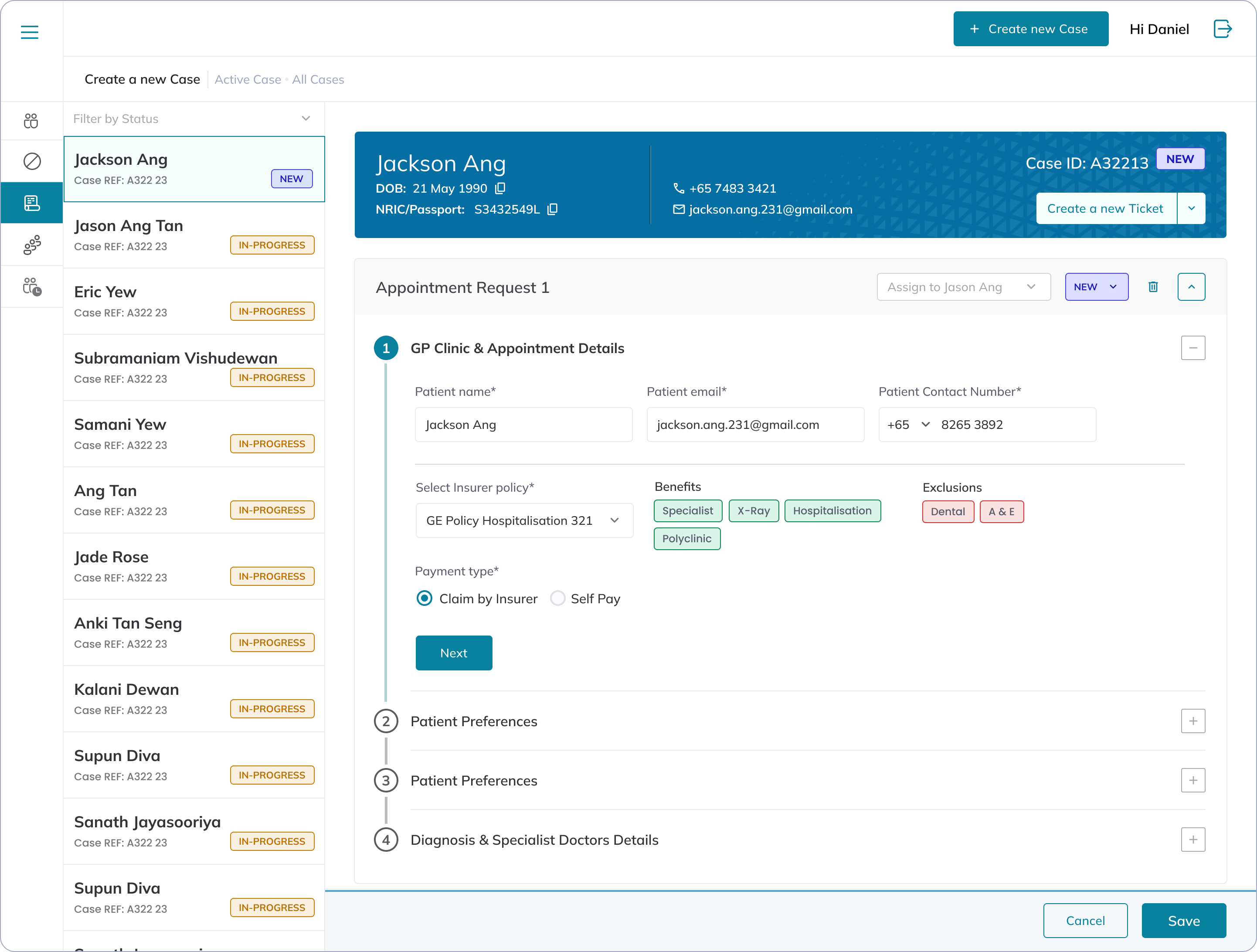
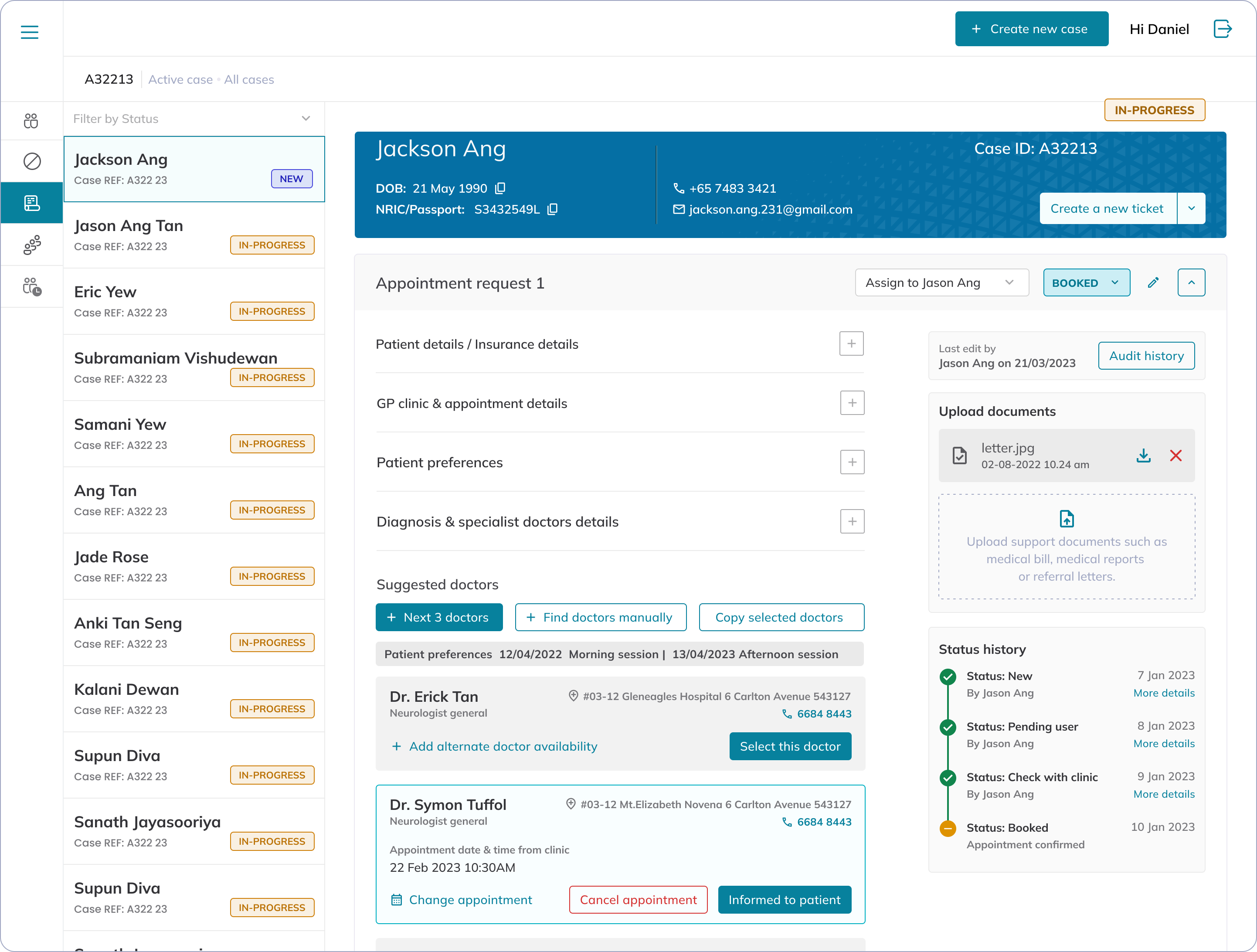
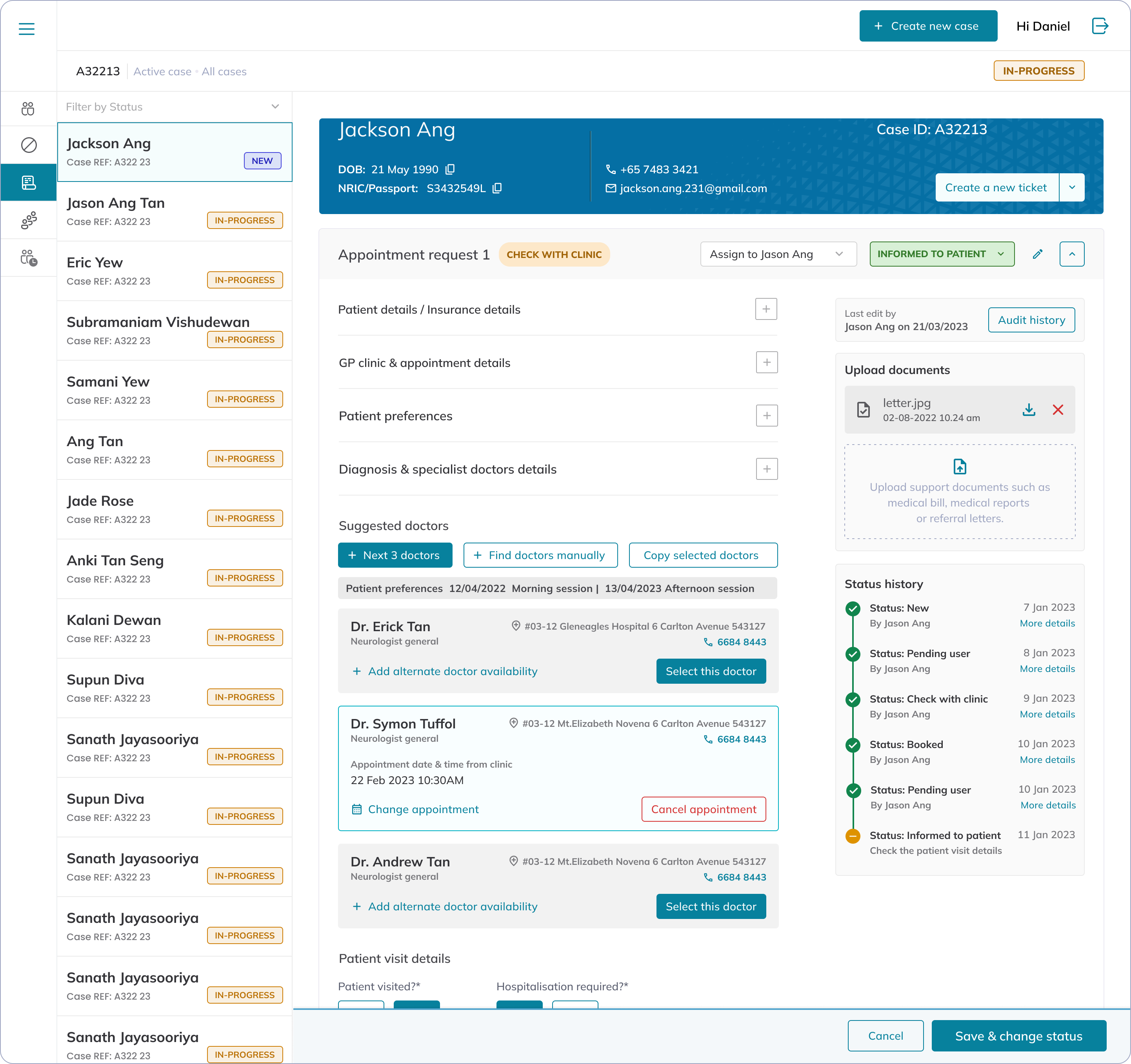
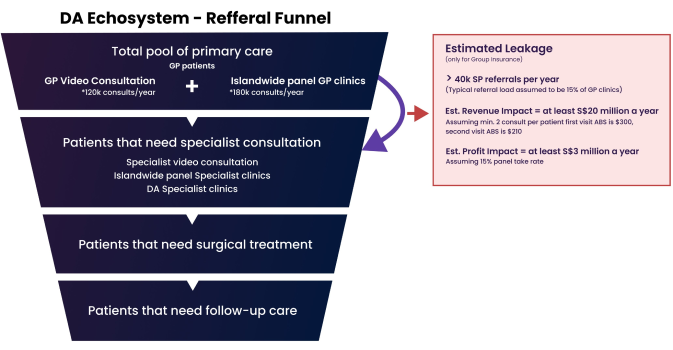
DoctorAnywhere (DA), Southeast Asia’s top telemedicine provider, has clinics across Singapore. When a GP refers a patient to a specialist, the medical concierge team helps book and confirm the appointment.
Contact Center Management (CCM) is a software platform that centralizes all patient interactions, making it easier to manage and operate a contact center. By streamlining the GP-to-Specialist consultation process, CCM reduces costs and enhances customer satisfaction.
Who am I in the product?
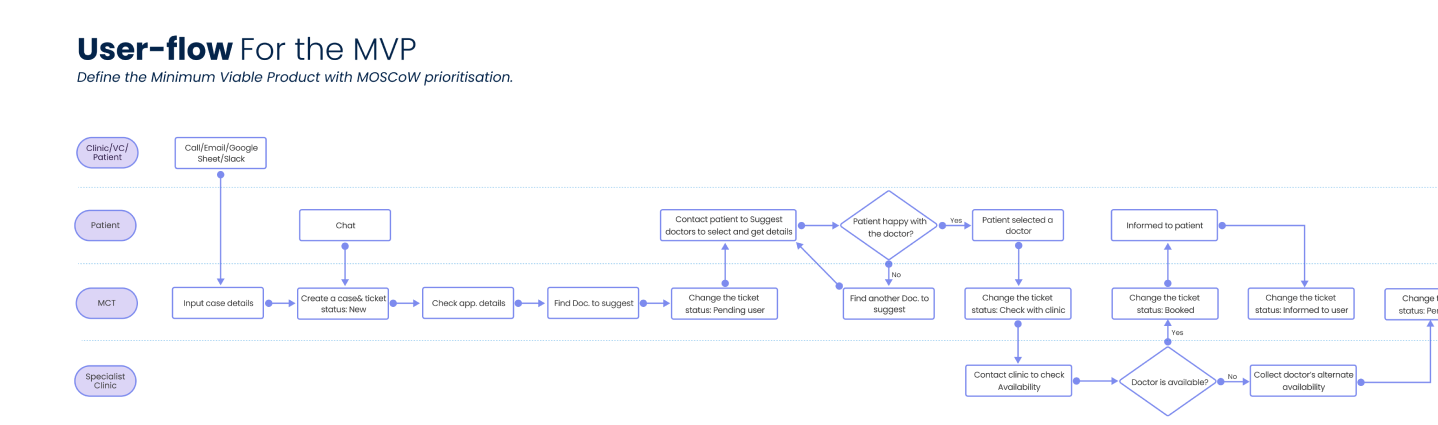
As a Lead Product Designer, help to create the product strategy. After research and synthesis, understand the user behavior and Identify the possible solution by creating Current-state and future-state journeys, and define MVP & product phases. Created user flows with sketches, validating by usability tests, and creating high-fidelity.
What is the Problem?
  • High human error rate (Updating all the patient requests in a complex excel sheet)
  • Average 32% of daily user complains.
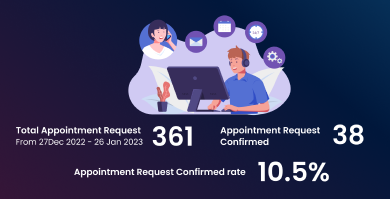
  • 48% patient drop-off due to MCT time taken to complete the case.
  • 89.5% of appointments are unable to secure and proceed.
Success metrics
  • Appointment requests conversion Rate: How many x% request converted to confirmed appointment
  • User complaint rate: Reduce patient daily complains to x%
  • Digitalise the manual flow: Reduce the human error and increase the time to complete the appointment requests case by x%
  • Decrease in Support Requests: Reduce the App related support request by X%
Process
1
Understand
2
Hybrid approach
3
Journey map
4
Ideation
5
Design
UNDERSTAND
Discovery
Understand the current data and current way of working.
  • Map out the current GP to SP referral flow
  • Map out the current GP to SP referral cashless insurance flow
  • Analysis the current MCT team data collection Excel document
  • Understand the current patient sources and escalation paths
More details on Discovery
Hybrid approach
Research first or Hypothesis first?
For most product designs, using a hybrid approach for each decision works well: Create a current-state map first to understand existing opportunities, and then create a future-state map to envision new ideas holistically. Use a hypothesis-first approach to build buy-in with stakeholders; then follow up with user research to validate or evolve assumptions and create a second version of the map integrating primary user research findings.
More about the Hybrid approach

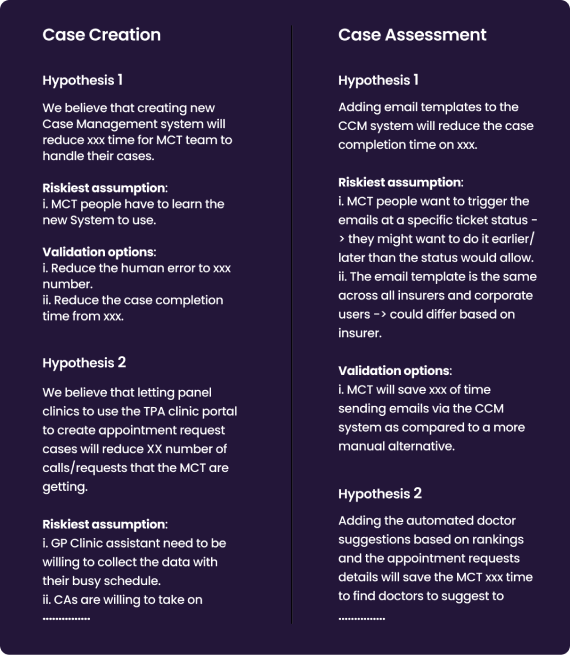
Hypothesis

Based on the understanding of current workflows and information, conducted a workshop with stakeholders and created a Hypothesis map for different stages such as case creation, case assessment, and hospitalization and validated it with them.

Research & Analysis

I have prepared an interview script with 15 open- ended questions, focusing on our target audience’s values, pain points, motivations, and daily routines. Conduct face-to-face user interviews with 3 Medical Concierge team members and 2 stakeholders. With reference to the user interview findings created the hypothesis & assumptions.

Journey map
Current-state & Future-state journey mapping
Current-state journey maps visualize the experience customers have when attempting to accomplish a goal with our product and company as it exists today.
Future-state journey maps visualize the best-case, ideal-state journey for our product that doesn’t exist yet.
More about the Hybrid approach
Ideate

Low-fidelity & wireframes

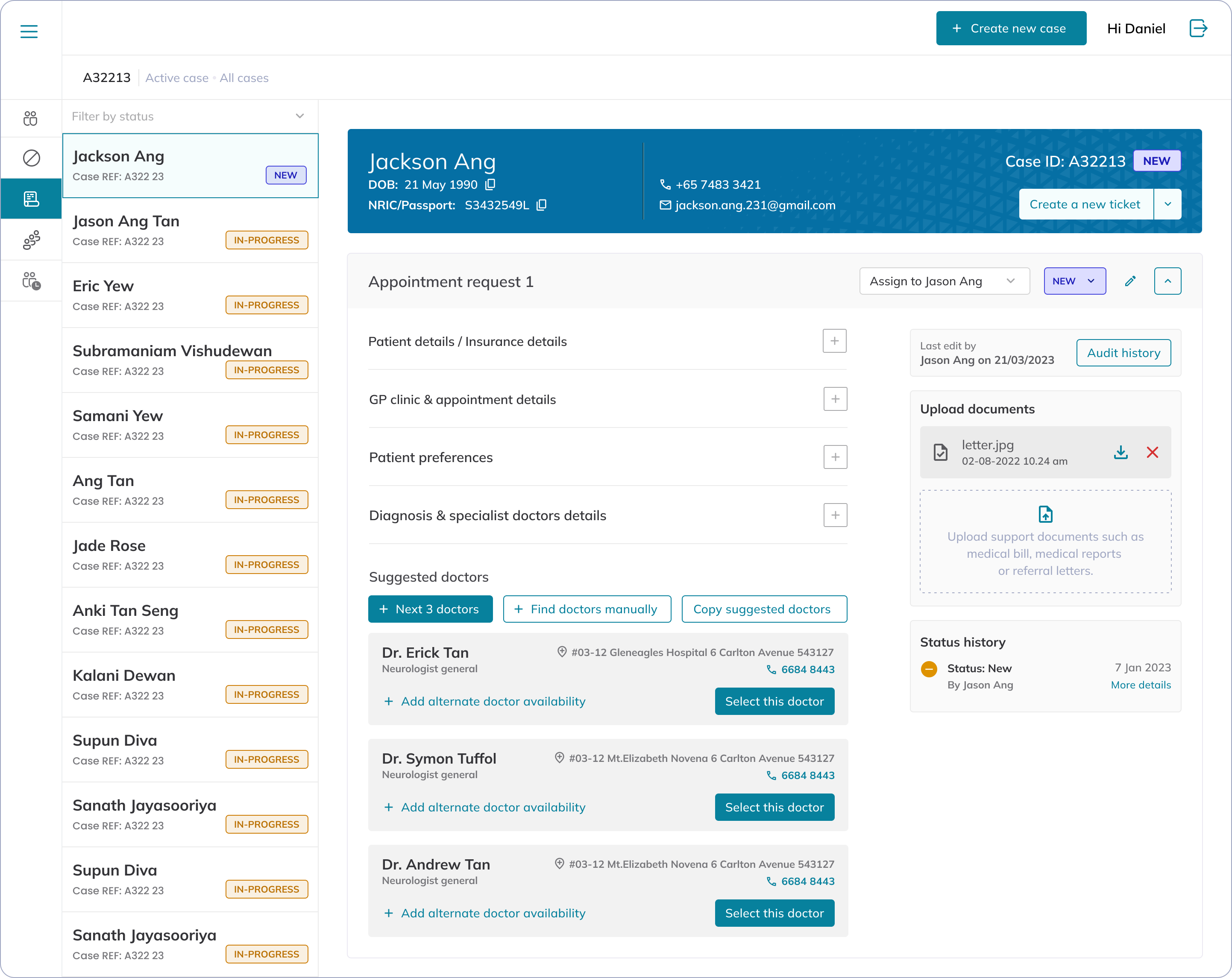
Using Miro, I translated my first sketches into low- fidelity wireframes. Then conducted a moderate usability test with stakeholders and based on the findings & insights enhanced the low-fi and validate again with stakeholders for the final version.

Validate

Conducted in-person unmoderated usability testing. In the usability testing, they completed eight tasks. During the testing, I observed users interacting with the prototype, collected data on their behavior and feedback, and completed the iterations with valuable insights. The end of the usability test informed users to fill out the System Usability Scale to understand more.

77.5
SUS Score
16.6%
User error rate
83.3%
Error free rate
Next steps
Start working on the next phase of the product. Adding the deprioritized could have features. Work closely with the data team to identify the user behaviors to identify the gaps and improve those.
Key Learnings
User research is critical. User research is critical: Before starting the process, I conducted extensive user research to understand the pain points of the current Medical concierge team flow and their needs and expectations of them. This helped me to identify the most critical features and functionality to focus on in the design.
Collaborate with developers. Throughout the design process to ensure the design was feasible and could be implemented within technical constraints. This collaboration helped ensure the final product was visually appealing and functional.
Communication is crucial. I provided regular updates and presented design solutions with clear reasoning to ensure all stakeholders were aligned and aware of the product progress. This helped keep everyone on the same page and ultimately resulted in the successfully launched Contact Center Management.