Design for Growth

Implementing Product led vision

OUTCOME

Consistent and efficient product development (Reduced the development effort by 34%), improved collaboration, and a scalable foundation, ultimately resulting in faster feature delivery and easier long-term maintenance.

IMPACT

Enhanced user satisfaction, strengthened the company's competitive edge, and positioned the product for sustained growth and adaptability.
INTRODUCTION
Problem
BlueSG product bought by Singapore Based company and they are more in to operational side.
  • Lack of inefficiencies
  • Cohesive design process & difficulties to align with stakeholder
  • UI design changes only and due to lack of process takes longer time for iterations
  • Lack of inefficiencies
  • Cohesive design process & difficulties to align with stakeholder
  • UI design changes only and due to lack of process takes longer time for iterations
INITIAL APPROACH
Showing the value of Product led
Analysis the existing data and Identified the key main pain point as user's Churn & less engage
  • Conduct a Churn & less-engage user research [Survey and F2F interview]
  • Showcase the synthesis data to the management team and highlighted the value of research to validate the assumptions.
  • Conducted workshops with stakeholders and showcased the Quick wins and share the data to implement the roadmap
DESIGN PROCESS
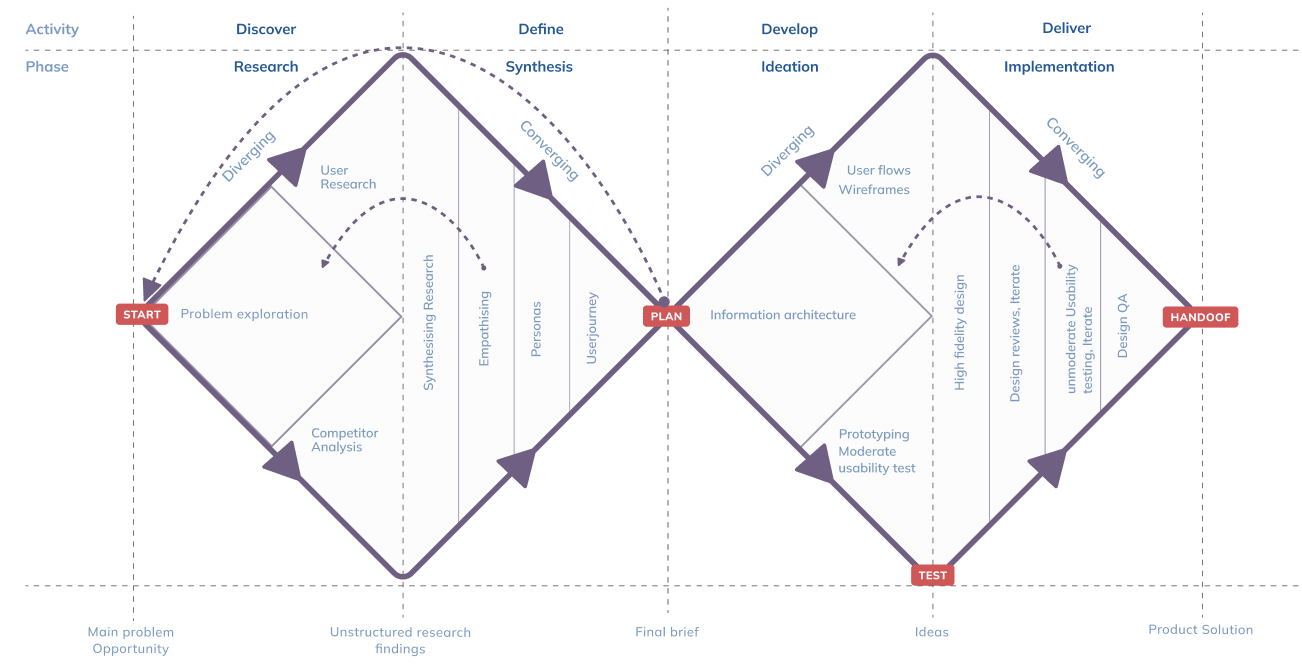
Double Diamond Process
Facilitate a workshop with the Product team and finalize the Double Diamond process for BlueSG.
  • Structured process
  • Iterative approach
  • Holistic Prospective
  • Collaboration
DESIGN TEAM
Growing the team
Hiring pipeline and referral pools dried up and we still had two open positions to fill due to growth, I knew we had to think outside the box. That’s when I took it upon myself to create a compelling job ad deck using Figma that resonated with the design community and inspired many talented candidates to apply.
  • Created the recruiting process.
  • Take home assigment.
  • Designer career path
TEAM GROWTH
Building culture through other team rituals
🎓 User Experience University (UXU): These bi-weekly workshops and presentations are an opportunity for us to share knowledge and train each other on design topics.
🎨 Design Critique: Every week, we gather to present our work and receive feedback from the team. This is a chance for us to learn to improve our craft and ensure coherency throughout the product. This provides an opportunity for us to see what everyone is working on and stay connected.
🏢 Team Collaboration Monday: While the majority of us are remote, we still try to gather in person on a regular basis.
UX Vision & Pillers
Deliver a delightful and intuitive experience that engages the community and integrating car sharing into daily life.
Delightful We make the experience pleasurable. We delight by personalizing content, incorporating micro-interactions, and paying a lot of attention to details and aesthetics.
Empowering It's important to create experiences that empower people and make them feel capable of achieving their goals, regardless of their level of experience.
Visibility We always stay in real-time touch with the user, informing them about immediate inside and outside factors in a clear, distinctive way.
DIRECTION
Building the Design System
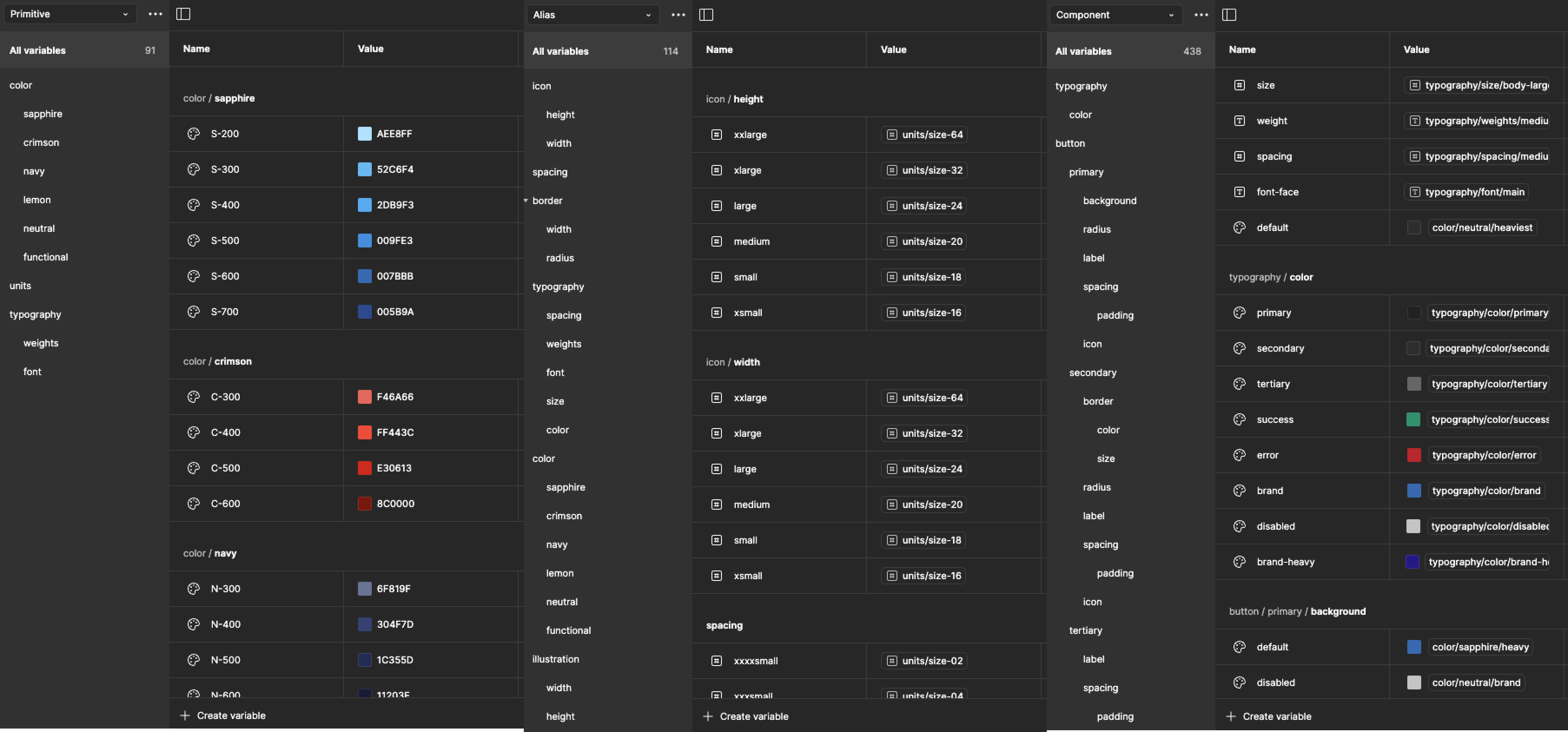
Developed a tokenized design system grounded in atomic design principles to enhance scalability and consistency across the product.
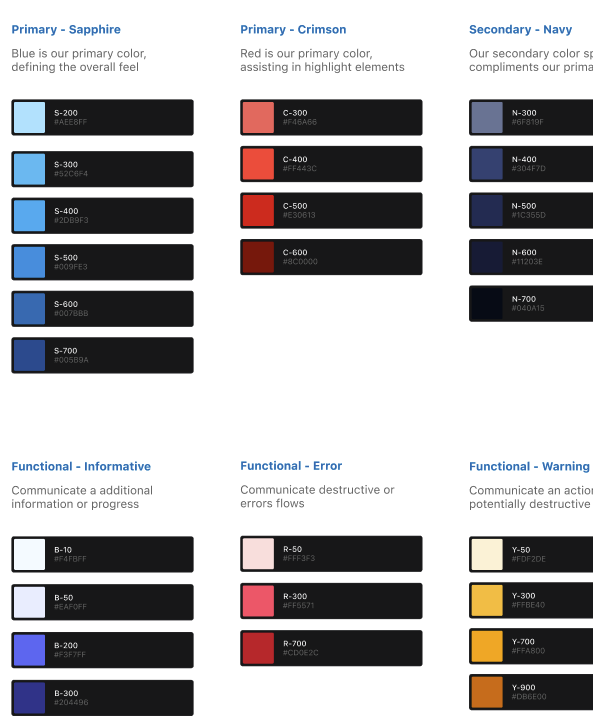
Key Colors and Tonal Pallet
Key colors representing our value propositions and the tonal pallet from its’ tints and shades.
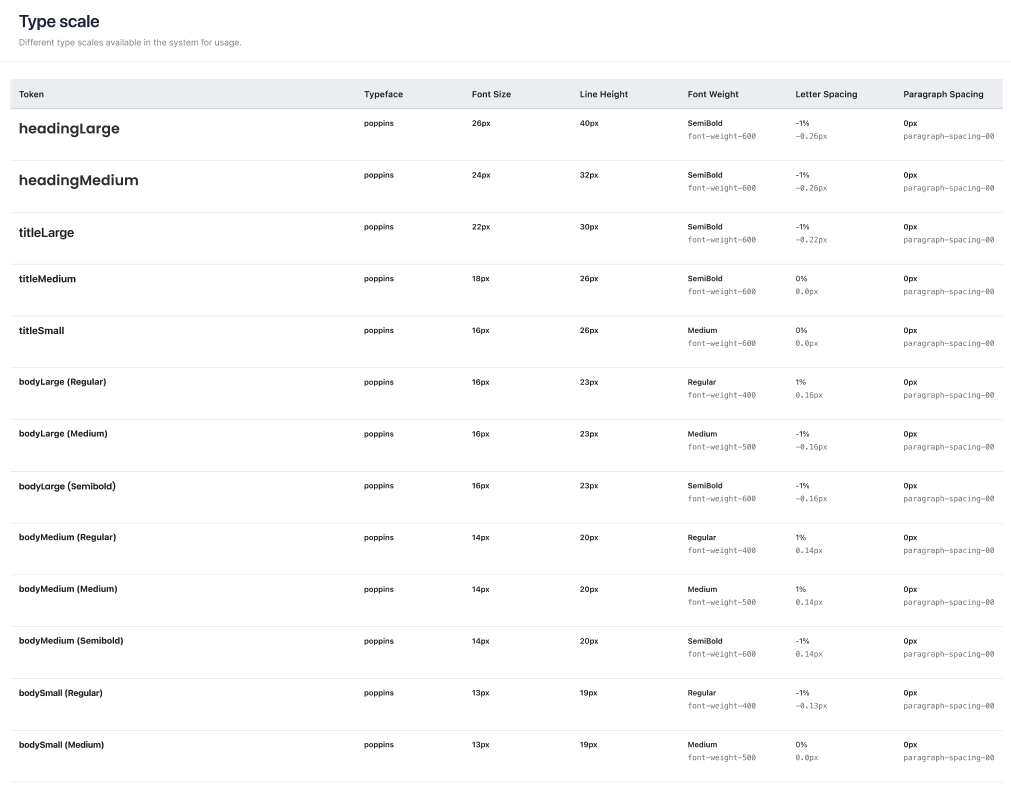
Type scale and formatting
Define the type scales and the formatting to address different use cases across the app.
Voice & Tone
Conducted workshop and finalized the voice & tone together with the marketing team.
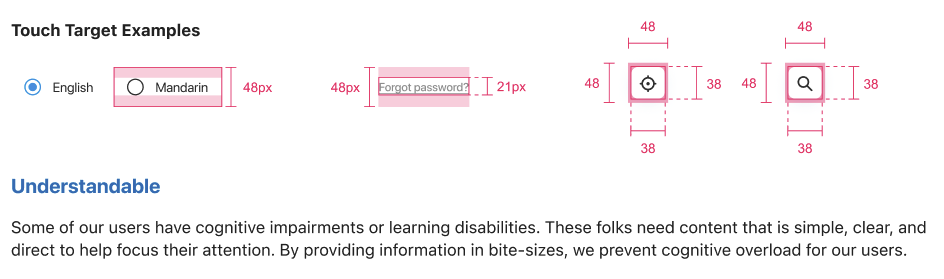
Accessibility
Our guidelines for accessibility are driven by four principles. They spell out the acronym POUR (Perceivable, Operable, Understandable, Robust).
DESIGN TOKEN
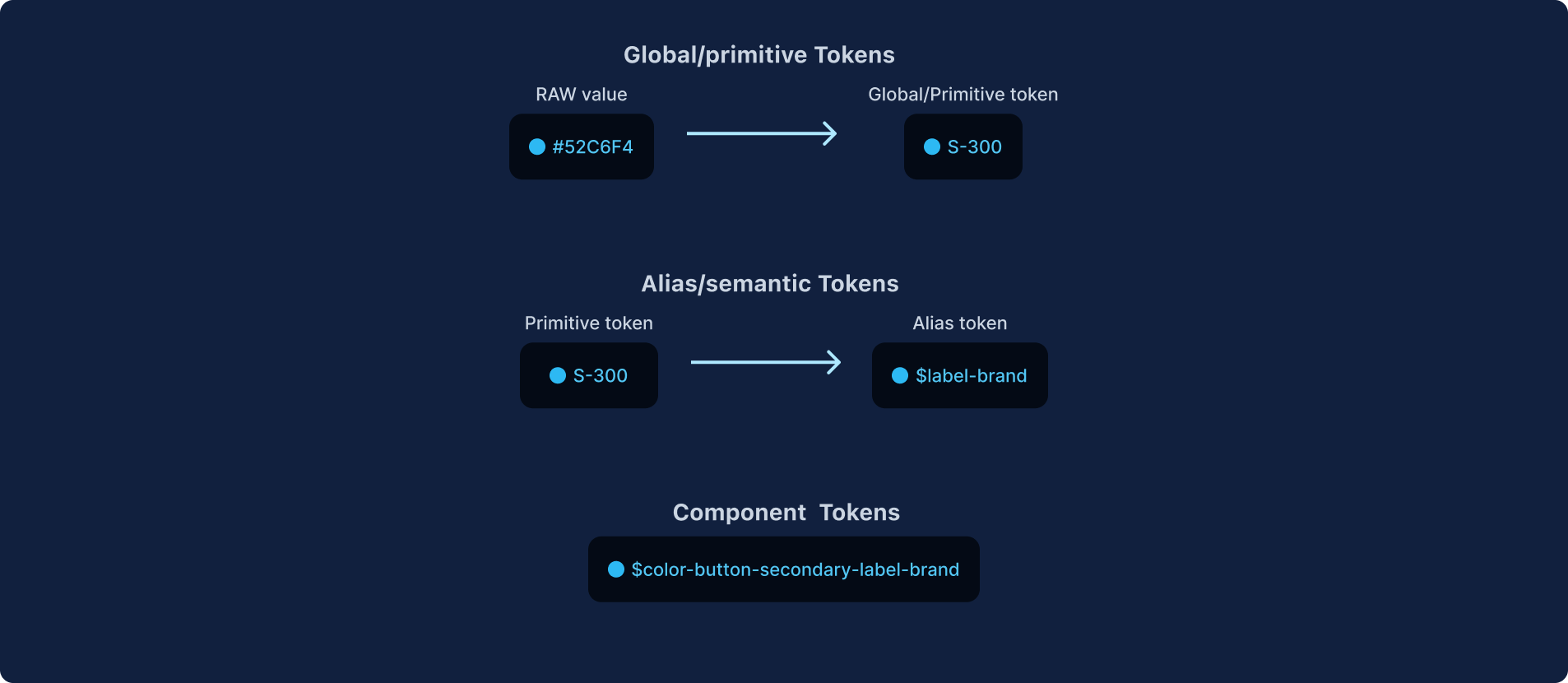
The bridge between design and code
Having a design system greatly enhances consistency and efficiency, simplifying our workflow and speeding up the process. However, the challenge lies in making the design system truly beneficial for engineers and ensuring consistency between our Figma designs and the codebase. This is where design tokens come in, acting as a bridge between design and code. Our engineers appreciated this approach, recognizing its value in maintaining consistency, efficiency, and ease of maintenance. While Material Design offers its own token system with a robust architecture and naming conventions, we couldn't use it directly because we weren't using Material UI out of the box. As a result, developed our own token system.
TAKEAWAYS
Collaboration with Cross Functional Teams
End of the day, everything is a teamwork. No matter how user friendly and pretty our designs are, if it’s not feasible to develop, or not aligning with business goals or priorities, or not useful to the users. The key to create something works for all is the collaboration... collaboration with cross functional teams (engineers, product managers, sales, marketing, legal, compliance, etc).