01Spreadsheet audit
Case details, insurer information, clinic coordination and status tracking lived in one dense operational sheet.
Design implication
The product needed a traceable case model rather than a digital copy of the spreadsheet.
DoctorAnywhere
I transformed a fragile GP-to-specialist concierge workflow into a case-and-ticket platform that reduced manual effort while preserving the judgement agents need in complex care situations.
A concise project brief that makes my individual contribution, collaborators and definition of success clear before the detailed process.
The concierge team managed referrals, insurer details, clinic coordination and patient updates in one complex spreadsheet. Errors, slow case completion and unclear hand-offs affected both patients and staff.
The product worked because we modelled the service around it—not just the spreadsheet on top of it.
I connected behavioural, operational and qualitative evidence before choosing a solution. Each signal created a concrete design implication.
Case details, insurer information, clinic coordination and status tracking lived in one dense operational sheet.
The product needed a traceable case model rather than a digital copy of the spreadsheet.
Three agents and two stakeholders described different needs across case creation, assessment, follow-up and hospitalisation scenarios.
The workflow needed clear common stages with room for exception tickets and agent judgement.
GP referral and cashless-insurance journeys shared work but diverged at key hand-offs, evidence requirements and escalation points.
One platform needed to support multiple service paths without forcing them into an identical sequence.
The blueprint keeps the customer journey, visible product behaviour and operational responsibilities connected across the same sequence.
A referral or specialist request enters the concierge service.
The patient receives acknowledgement and clear next-step expectations.
An agent creates a structured case with source, insurer and referral context.
Provides missing information when required.
Requests are specific rather than repeated or ambiguous.
The agent validates eligibility, documents and urgency before progressing.
Waits for a suitable clinic or specialist option.
Progress communication reduces uncertainty during coordination.
Tickets track clinic, insurer and internal follow-ups inside the case.
Reviews and accepts an appointment option.
Appointment details and requirements are made clear.
The agent records confirmation and closes dependent follow-ups.
Completes the hand-off or receives support for an exception.
The outcome and next owner are visible.
The case history remains traceable for closure, complaint or escalation.
Scroll horizontally on smaller screens to follow the complete service.
The artefacts were useful because they helped the team make choices. This is the evidence-to-decision trail behind the final experience.
A flat row mixed a patient journey, many follow-ups and several owners.
Use a parent case for the patient request and linked tickets for actionable follow-ups.
Rules repeated, but exceptions still required agent interpretation and coordination.
Automate structure, states and traceability first while keeping judgement with the concierge team.
Referral, insurer, appointment and hospitalisation paths could make a first release too broad.
Prioritise the smallest coherent case lifecycle and validate eight critical tasks before scaling scenarios.
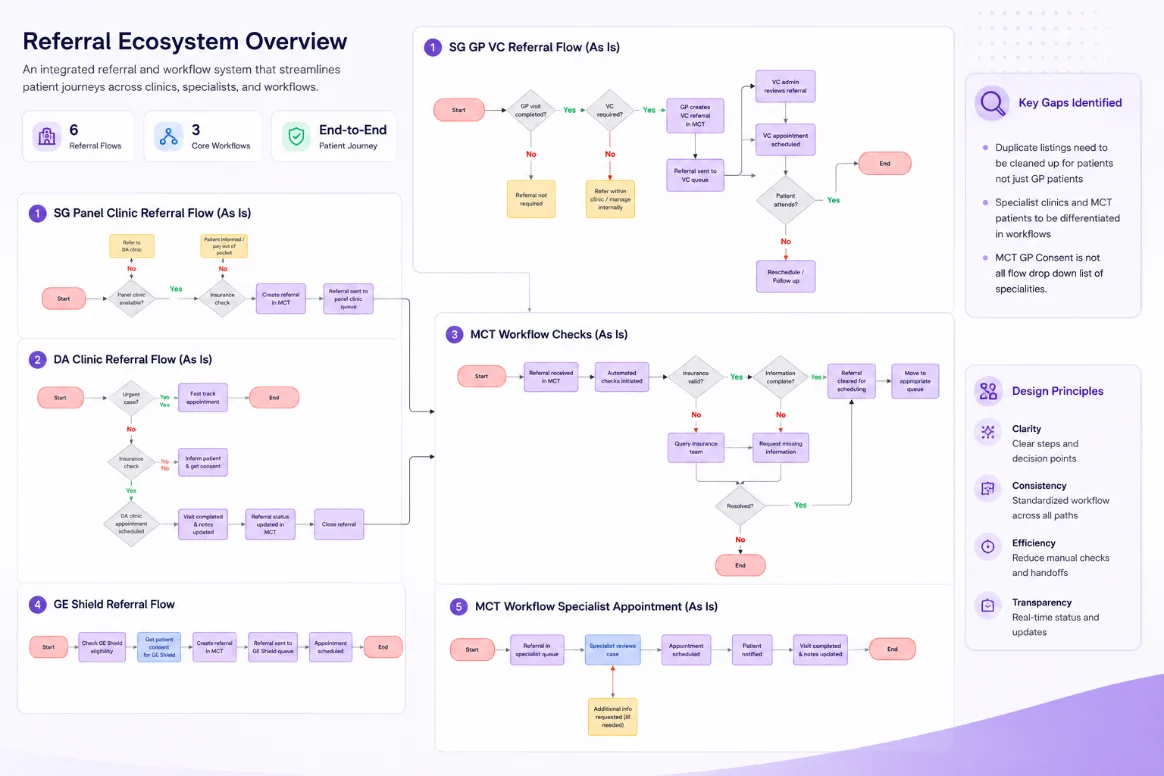
I treated the operating experience and the interface as one system. Each lens solved a different part of the same problem.
Shaping the ecosystem, hand-offs and operating model.
Turning service decisions into clear, usable product behaviour.
Mapped referral, insurance, patient-source and escalation paths, then analysed the team’s working spreadsheet to see how the service actually operated—not how process documents said it worked.
Facilitated stakeholder mapping, created a 15-question research guide and interviewed three concierge agents plus two stakeholders to test assumptions about case creation, assessment and hospitalisation.
Used current- and future-state maps to define the target experience. Converted the hand-offs into a case-and-ticket model, then prioritised the smallest coherent workflow for launch.
Validated the flow with stakeholders and agents, iterated low-fidelity wireframes, then ran an eight-task usability study on the high-fidelity product before delivery.
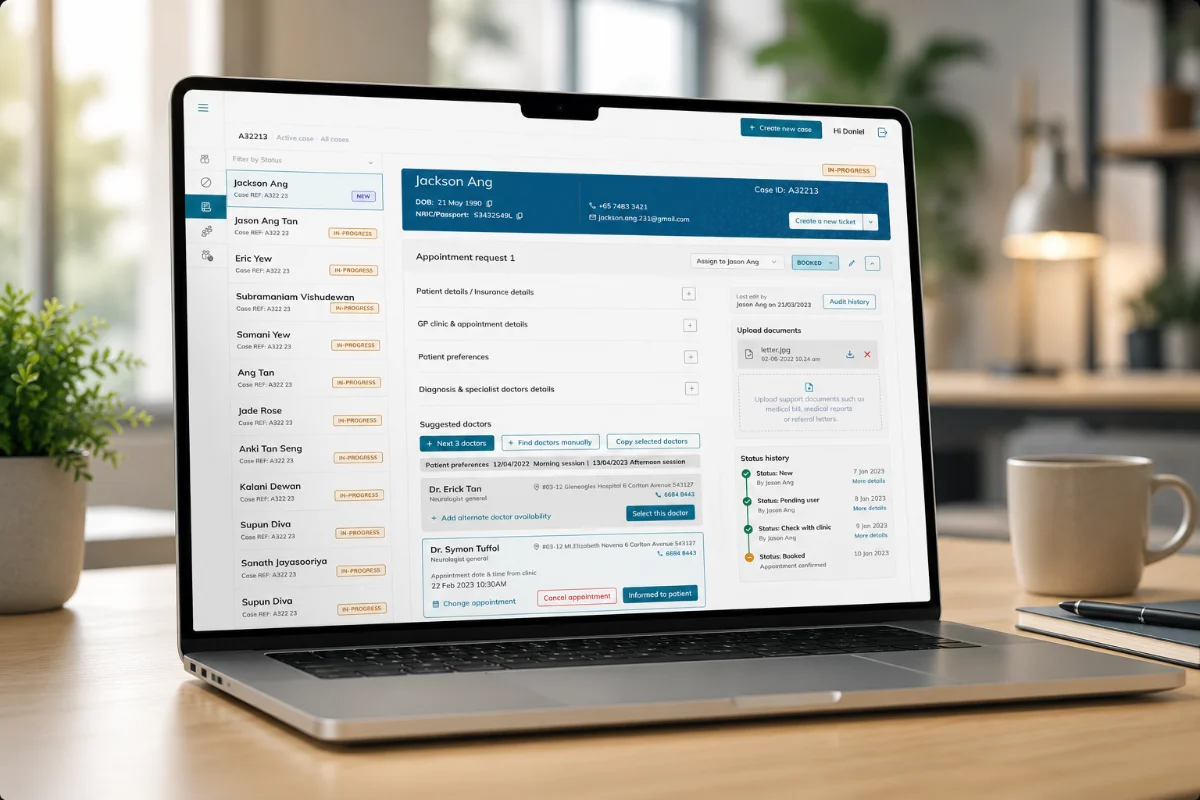
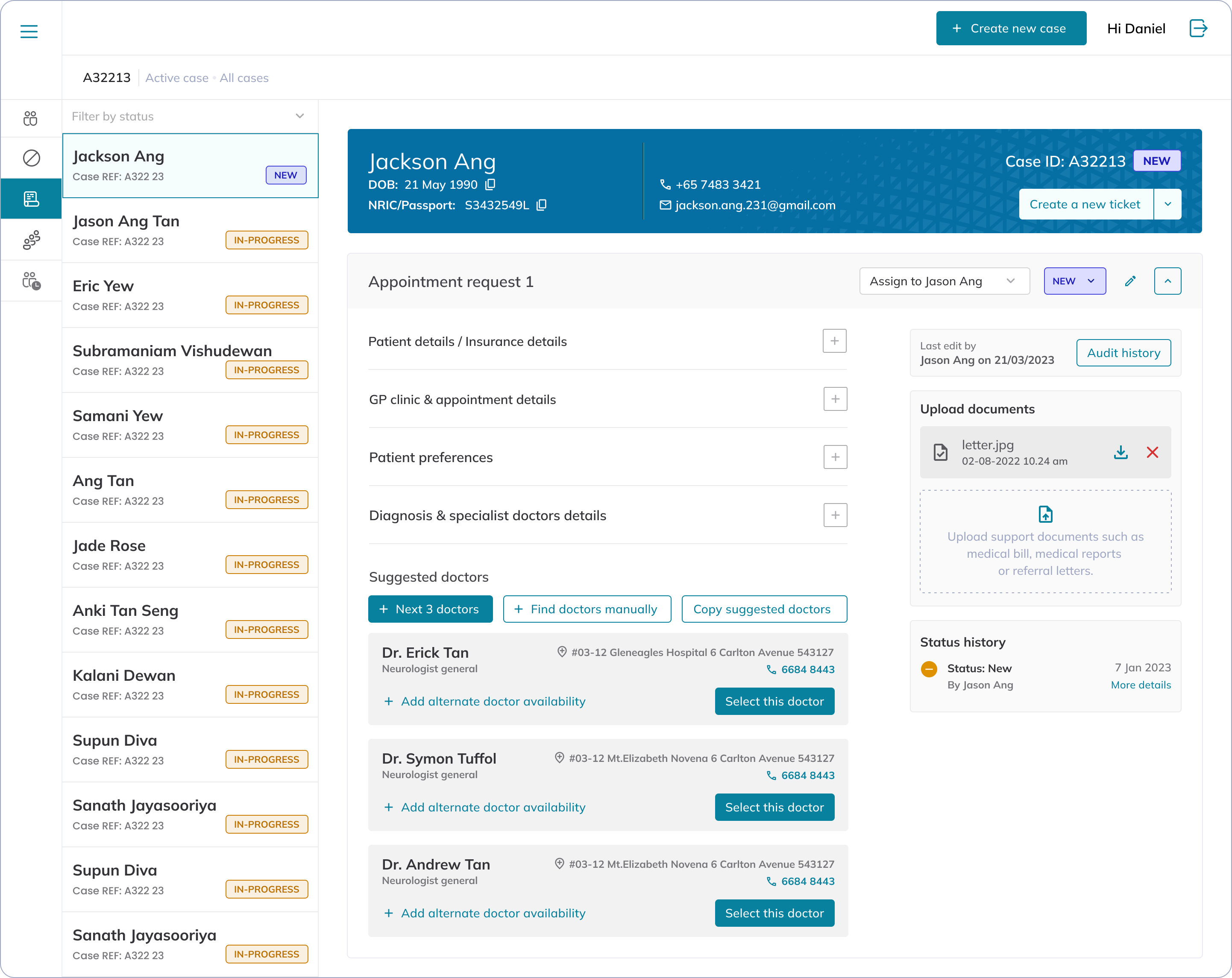
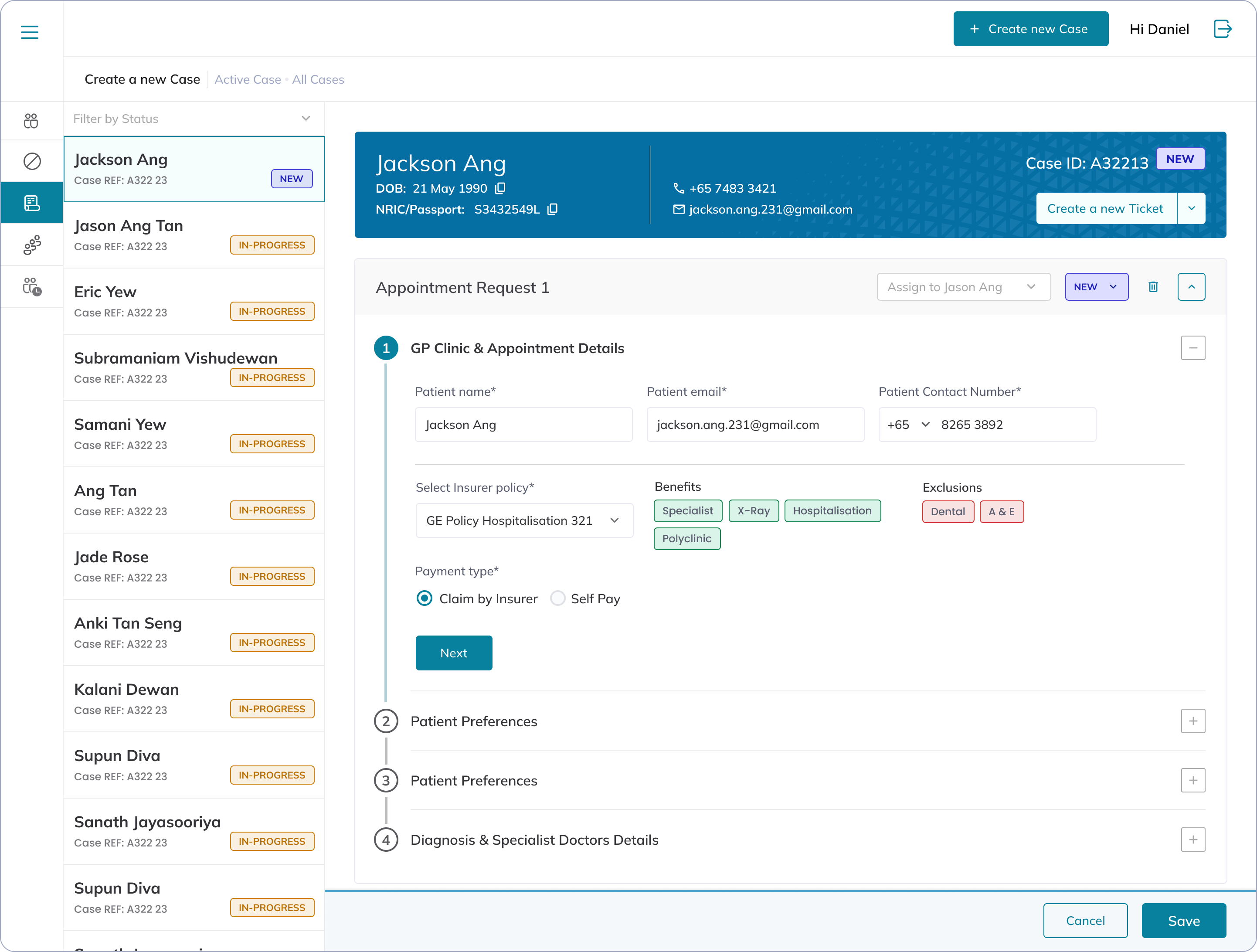
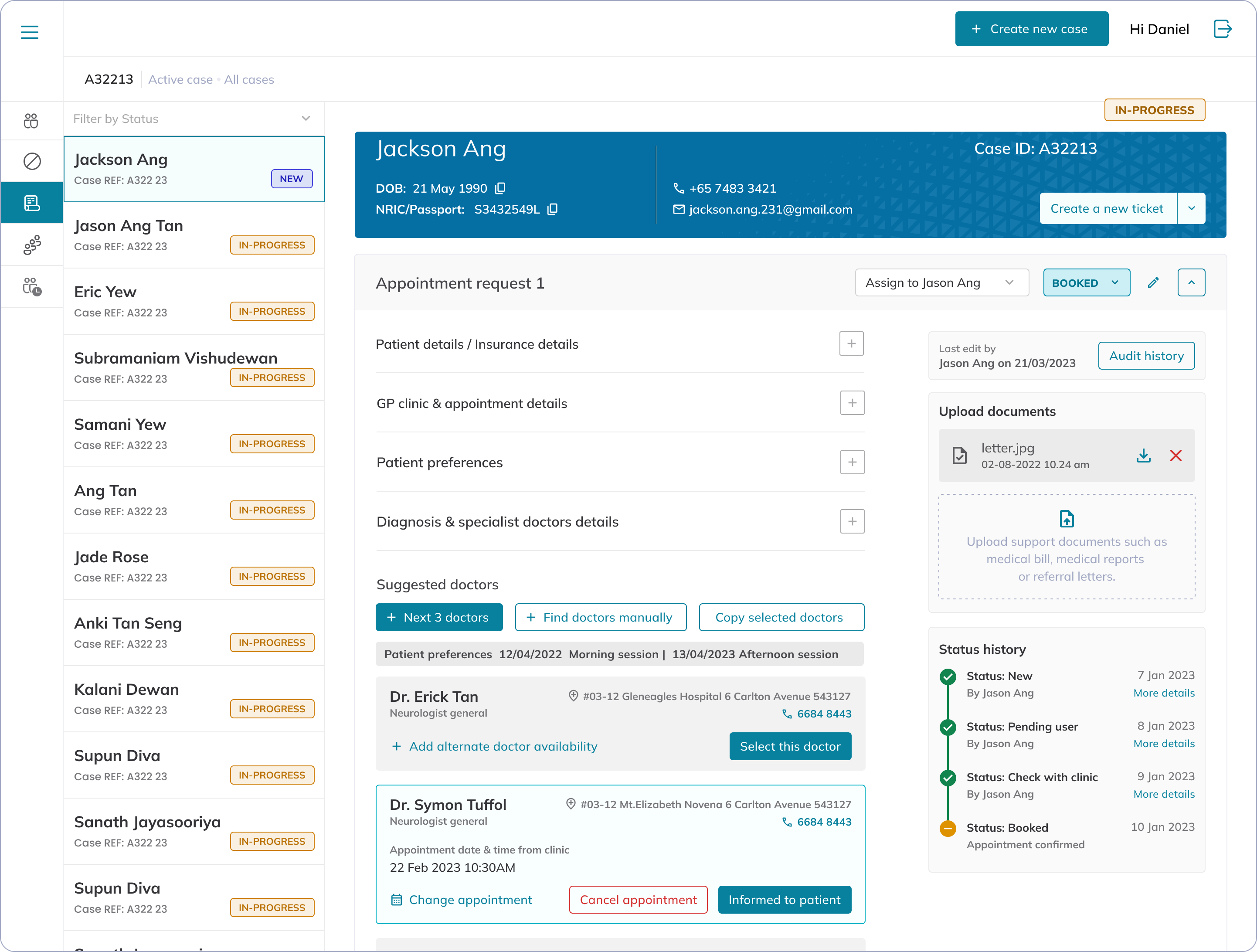
The high-fidelity design turned the service model into a practical agent workspace. Read together, these screens show how an agent creates a structured case, coordinates the referral and closes the loop with a confirmed appointment and traceable history.
A stepped intake captures GP, patient and insurer information in the order agents need it. Policy benefits and exclusions remain visible at the point of entry, reducing rework before the referral progresses.
The case header, appointment ticket, supporting documents, ownership and suggested specialists sit in one workspace. Agents can move the request forward without reconstructing context across separate tools.
The booked state keeps the chosen specialist, appointment time, follow-up actions and status trail together. Agents can change or cancel the appointment while retaining a clear record of how the case reached its outcome.
These constraints shaped the solution, the order of work and the compromises I made with the wider team.
Standardising the workflow risked hiding urgent or unusual patient situations.
I standardised the case lifecycle while using tickets, notes and escalation states to keep exceptions explicit.
The team still had to manage active patients while moving away from a familiar spreadsheet.
The MVP followed the agents’ mental model, used recognisable status stages and focused first on the highest-risk manual work.
Patient, referral, insurer and clinic data needed to be visible without overwhelming the workspace.
Information was grouped around the task and case stage, with traceable ownership rather than one dense all-purpose view.
The 90% error reduction and 80% manual-workload reduction are the verified operational outcomes used in this portfolio; usability evidence came from an eight-task test.
Digitised a fragile spreadsheet-heavy operation.
Reduced manual workload without automating away agent judgement.
Created one traceable view of patient requests, clinic updates and statuses.
Established a foundation for later provider-recommendation capabilities.
I translated a complex human service into a scalable product model without automating away the judgement that made the service safe and workable.
The right abstraction was not a better spreadsheet; it was a case lifecycle supported by smaller accountable tickets.
I would instrument time-in-stage, reopened tickets, exception categories and patient communication gaps to guide the next automation priorities.